A no buy makeup challenge pauses new makeup and skincare extras for a set time while you use what you already own. Replacing a product that is used up — with one of the same kind — stays allowed, and so does anything you need for health or a skin condition. The one thing the challenge must never ask is that you keep using something that has changed, irritates you, or is past the point you would normally throw it away.
Why makeup needs its own rules
A clothing pause is about things that last. Makeup and skincare are consumables: they get used up, and they change with age. The US Food and Drug Administration (FDA) explains that a cosmetic’s shelf life varies with the type of product, how it is used and how it is stored — and that eye-area products tend to have shorter shelf lives. So a makeup challenge needs two kinds of rules: what you will not add, and when you will replace.
Step 1: A quick inventory
Gather your makeup and skincare in one place — or work drawer by drawer if that is easier. For each product type, note:
| Column | What to write |
|---|---|
| Product type | Foundation, concealer, mascara, eyeliner, lipstick, moisturizer, sunscreen… |
| What you own | A short description, or a count of similar items |
| Opened? | Yes/no — and roughly when, if you know |
| Condition | Fine / changed (smell, color, texture, separation) / dry |
| Next use | “Daily”, “weekend”, “use up first”, “pass on”, “discard” |
The FDA suggests marking the date you open a cosmetic to keep track of its age. If you do not know when something was opened, that is a useful finding in itself.
Step 2: Find duplicates and near-duplicates
Inventories often reveal several of the same thing: five nude lipsticks, three nearly identical eyeshadow palettes, two moisturizers both half-used. Group them. Within each group:
- Put the open one first.
- Use the oldest suitable item before newer ones.
- Consider passing unopened duplicates to someone who will use them, if that is appropriate and safe where you live.
The goal is not to own fewer things by a deadline; it is to stop adding to a group you already have covered.
Step 3: Write replacement rules by type
Use a “same kind, when used up” rule, and be specific per type:
- Everyday base (foundation, concealer): replace when the current one is used up, with one in the same shade range. No “backup” bottles.
- Mascara and eyeliner: replace on your usual schedule. The FDA notes manufacturers usually recommend discarding mascara two to four months after purchase, so a long challenge will include a mascara replacement — that is allowed.
- Lipstick and gloss: use from the existing group; no replacements while others in the same group are usable.
- Skincare: replace moisturizer and cleanser when used up. Sunscreen and anything a health professional recommends are always allowed.
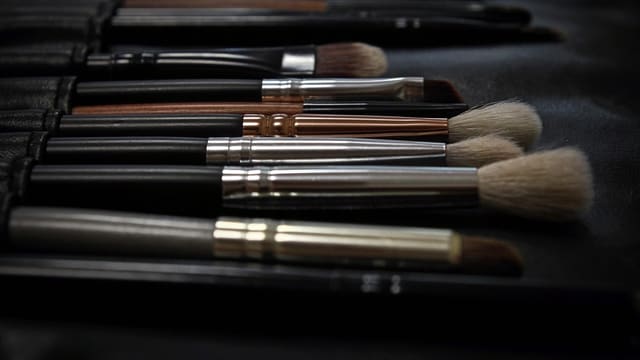
- Tools: brushes and sponges may be replaced when worn out or no longer clean after washing.
Step 4: Safety boundaries the challenge never crosses
These points come from the FDA’s guidance on cosmetics; they override any challenge rule:
- Products that have changed in color, smell or texture, or that have separated, are not “still usable” for the sake of a challenge.
- Eye infection: stop using all eye-area cosmetics, throw away the ones you were using, and talk with a health care provider.
- Dried-out mascara: do not add water or saliva to revive it; replace it.
- Do not share makeup, including swaps of opened eye products.
- Store products away from heat, such as a hot car — heat can break down preservatives.
Some products sold as makeup or skincare are also regulated as drugs — sunscreen and SPF makeup, for example — and carry expiration dates on their labels. Follow those dates.
A sample makeup challenge
My 90-day makeup pause
- Paused: new makeup; skincare extras I do not need yet; “limited edition” anything
- Always allowed: sunscreen, anything my doctor or pharmacist recommends, cleanser and moisturizer replacements
- Replacement rule: one of the same kind when a product is used up, past its date, or has changed
- Exceptions: none planned — anything my circumstances make necessary, after I update my rules
- Use-first list: the open foundation, the oldest suitable lipstick in each color group, the half-used palette
When you see something new
Launches, influencer recommendations and sample-size sets are designed to be tempting. Put anything that catches your eye on your pause list with a reconsider date at the end of the challenge. When the date comes, ask: does it replace something used up? Do I already own something that works? Many items will no longer feel necessary; some you will choose on purpose — both are good outcomes.
Individual needs come first
Skin conditions, allergies, work requirements and personal or cultural practices all shape what “necessary” means. If a product supports your health, your work or your sense of self in a way that matters to you, write it under always allowed. A makeup challenge that makes you uncomfortable in your own skin is the wrong challenge; a low-buy with a small, planned limit may suit you better.
Sources
- Shelf Life and Expiration Dating of Cosmetics — U.S. Food and Drug Administration. checked.
Written and edited by Kamel Medlej. Not reviewed by a licensed professional.How guides are written and checked.