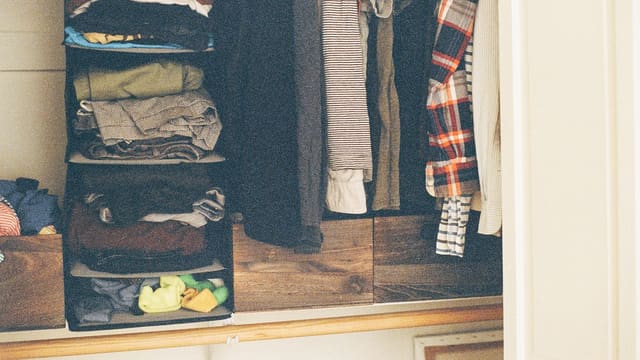
A “no new clothes” challenge means not buying clothes, shoes or accessories for a set time and wearing what you already own. Replacing something that is worn out, no longer fits, or is required for work, weather or safety stays allowed when nothing you own does the job. It is a voluntary pause for people with enough to wear — never a reason to go without clothing you need.
This page is about the voluntary clothing pause. If you are looking for affordable clothing because you need it, the challenge is not for you right now; local clothing banks, swaps and second-hand options may help, if available where you live.
Who a clothing pause suits
It tends to help when clothes arrive faster than they are worn: items with tags still on, near-duplicates, purchases made for a life you do not quite live. It suits people who enjoy clothes too — a pause often makes you more creative with what you have.
It does not suit a period when your body, job or climate is changing quickly (pregnancy, recovery from illness, a new job with a dress code, a move to a different climate) — or it needs extra-generous replacement rules during that time.
Step 1: A wardrobe check, not a purge
You do not have to declutter to start. A quick check tells you what you have and where the real gaps are.
| Look for | Why it matters |
|---|---|
| Items with tags on or never worn | Shows how many purchases went unused |
| Near-duplicates (three black T-shirts) | Shows what you already have covered |
| Things that need a repair (button, hem, zip) | Often the quickest “new” item you can get |
| Season gaps (a warm coat, rain shoes) | Real needs to plan for, not to panic about |
| Work and dress-code items | Required clothing stays allowed |
Write the gaps down. A gap you know about in week one is a planned exception; a gap you discover on a cold morning becomes an off-plan rush purchase.
Step 2: The clothing replacement test
Use a two-part test for any “but I need it” moment:
- Condition: the item is worn out (holes, broken zip beyond repair, soles worn through), no longer fits, or is required for work, weather or safety.
- No alternative: nothing you own does the job well enough.
Both must be true. “It’s old but fine” fails part one; “I have another pair that works” fails part two.
Replacement rule (copy and edit): “I replace clothing or shoes only when an item is worn out, no longer fits, or is required for work, weather or safety — and nothing I own works. One replacement for one item.”
Children outgrow clothes on their own schedule. Their needs are always allowed and are not part of your pause.
Step 3: Repair first
Mending turns many “replace” moments into “fixed”. Simple repairs — buttons, hems, small seams, re-soling shoes — extend the life of what you own. If you cannot sew, a tailor or cobbler is an allowed purchase in most clothing pauses (it is a repair, not a new item); write that into your rules if you want it explicit.
Step 4: Make the wardrobe feel new
These are suggestions, not requirements:
- Shop your closet once a week: build two outfits from things you have not worn recently.
- Rotate seasons deliberately so stored clothes return with fresh eyes.
- Swap with friends, if that suits you and your rules allow it — decide in advance whether swaps count as acquiring.
- Keep a short “wishes” note for things you notice you would like; review it at the end instead of buying now.
Fit, body changes and comfort
Bodies change. If clothes stop fitting comfortably, replacing them is allowed — that is a need. Wearing clothes that hurt or embarrass you is not a challenge goal. If you expect change (pregnancy, medical treatment, recovery), write a generous rule in advance, such as “anything I need to be comfortable during treatment is allowed”.
Not buying clothes for a year
A year without buying clothes is possible for many people, but it needs planning for twelve months of wear and four seasons (or the wet and dry seasons where you live). This plan assumes a calendar year; if you start mid-year, the plan covers only the months that remain.
| When | What to do |
|---|---|
| Before you start | Wardrobe check; list season gaps; write the replacement test; note dress codes and events |
| Monthly | 10-minute review: anything worn out? any rule to adjust? |
| Each change of season | Bring stored clothes out; check coats and shoes against the replacement test |
| Mid-year | Review the whole plan; narrow it or switch to a low-buy if it is causing stress rather than teaching you |
| Events (weddings, interviews) | Decide in advance: rewear, borrow, or a planned exception |
| Final month | Turn your wishes note into an intentional list; decide what comes next |
Year-long clothing pauses often hit trouble at the same points: a sudden event, a seasonal change, and the end of the year itself. Plan those three and most of the year runs itself. If twelve months of a full pause is too rigid, a low-buy year with something like “one planned clothing purchase per season” keeps the habit change with more flexibility.
When the pause ends
Before buying anything, read your wishes note. Buy on purpose, one item at a time, and ask whether each one fills a real gap. The after the challenge guide has a review you can use for clothes or any category.
Written and edited by Kamel Medlej. Not reviewed by a licensed professional.How guides are written and checked.